Technological Integration in Physical Education
Technology can play an important role in making physical education better by helping students better understand their performance, stay engaged, and be more in charge of their learning. When used effectively, it supports all areas of student development and creates more opportunities for students of all ability levels to find success.
GIF-Based Skill Demonstrations and Visual Learning Support
Students can use teacher-created or teacher-selected GIFs within the gym during skill instruction, station activities, and independent practice. This technology is most effective during the introduction and practice phases of a lesson when students are learning or refining movements, such as throwing, catching, striking, dribbling, or jumping. The purpose of using GIF-based instruction is to provide students with visual demonstrations of proper technique that can be replayed multiple times throughout practice. Unlike a one-time teacher demonstration, GIFs allow students to look at movement cues as often as needed. Students access the GIFs through QR codes, tablets, or display screens positioned around the gymnasium and compare their own performance to the movement model shown in the GIF in order to make corrections and improve technique in real time.



Fitness Tracking and Goal Setting
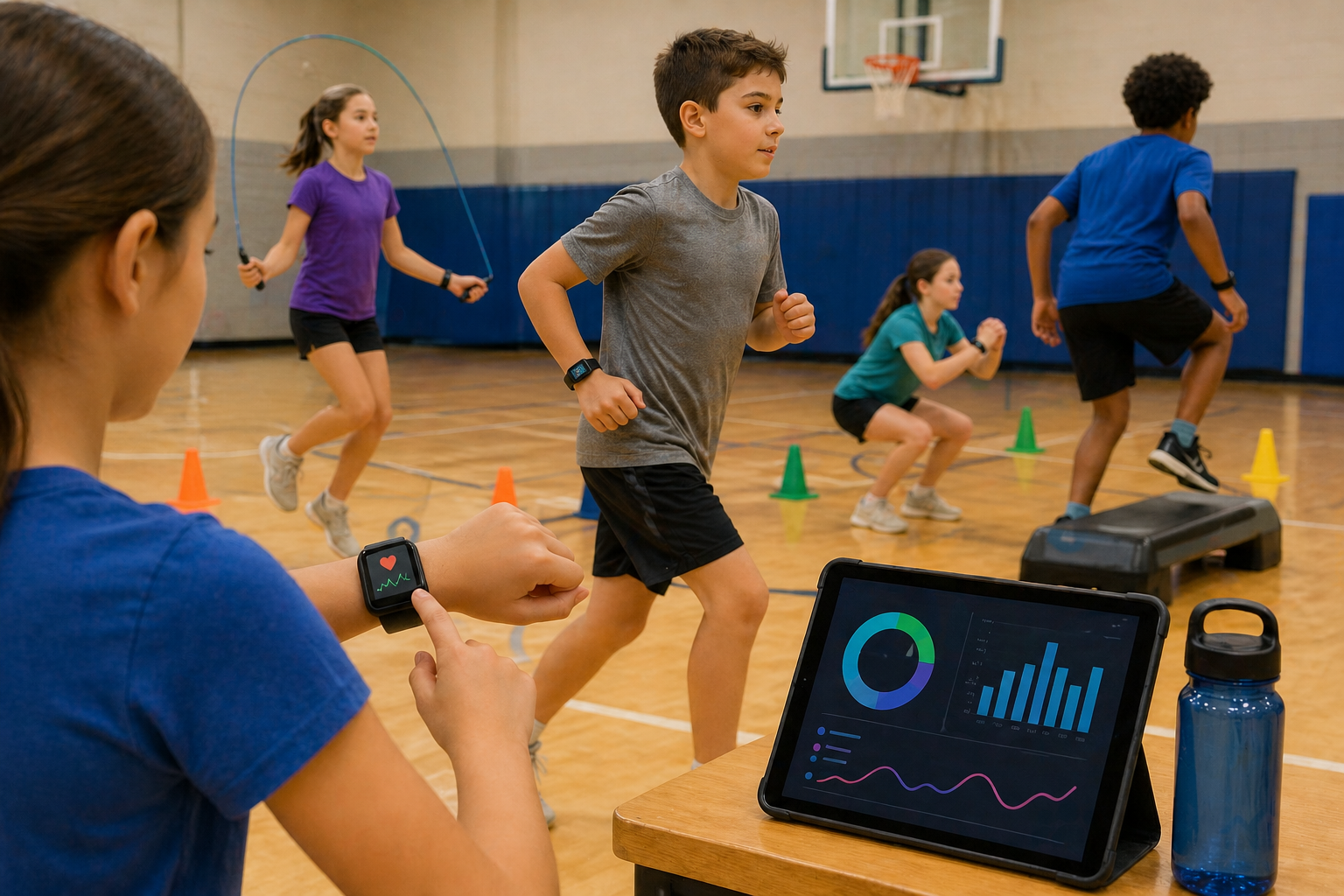
Fitness tracking technology, such as heart rate monitors or pedometers, allows students to monitor their physical activity levels and set goals for themselves. Students use wearable devices or fitness applications in the gym during various activities to monitor their fitness. This is used during warm-ups, conditioning activities, or fitness stations. The benefit of this technology is that it promotes accountability, motivation, and helps the students to develop personal responsibility for physical activity. Students track data such as steps, heart rate, or active minutes and use this information to develop fitness goals and aim to reach them.
Gamified Learning Through QR Code Stations
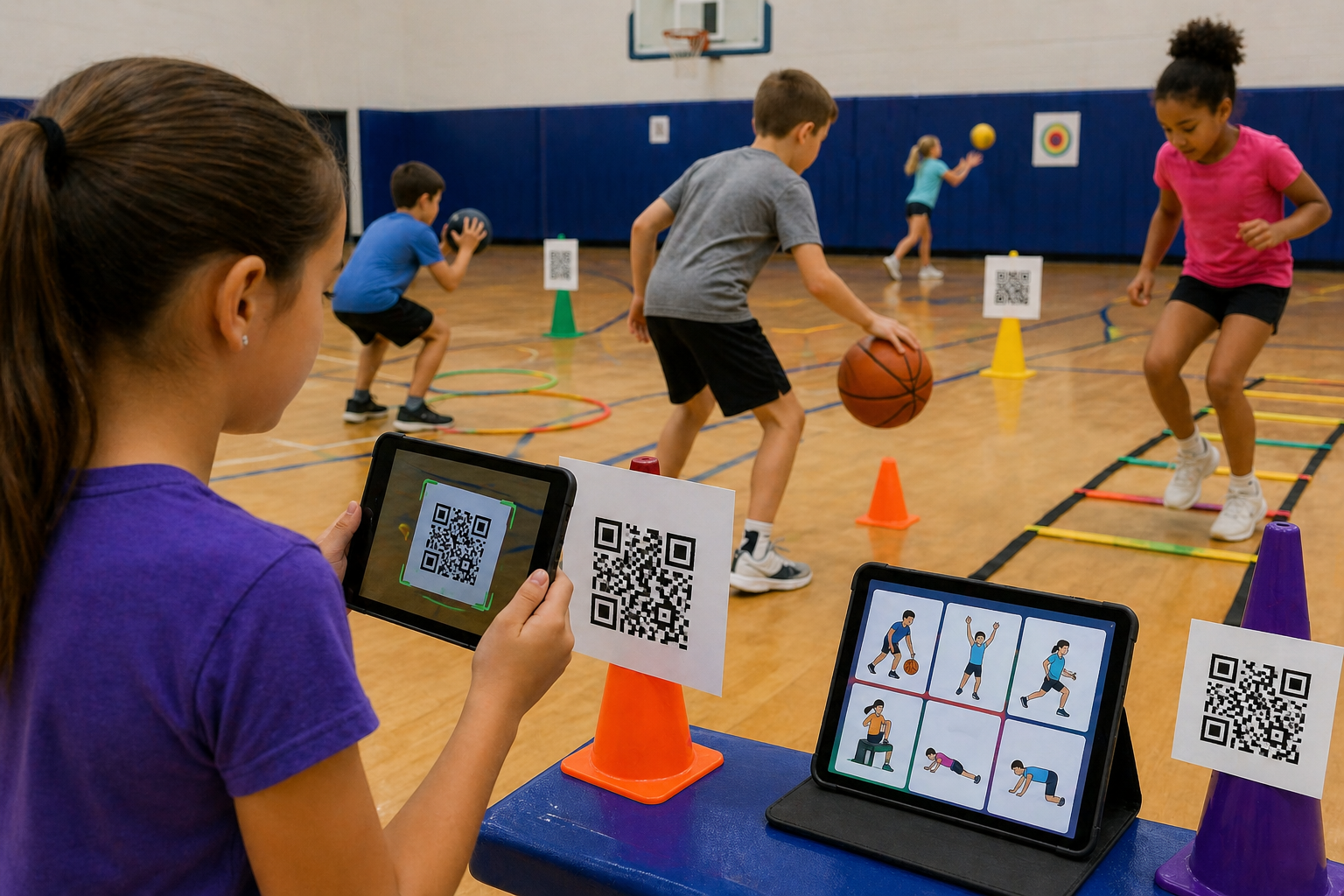
Gamification uses technology while the students are in different stations practicing various movements. Students use QR codes and digital task platforms in the gym during lessons in which the students move through different stations. This approach helps to increase engagement and motivation by allowing skill practice to turn into interactive challenges. Students move through stations, scanning QR codes to access instructions, movement tasks, or skill challenges that must be completed before moving onto the next station. This helps to promote independence, engagement, and active participation within the lesson.